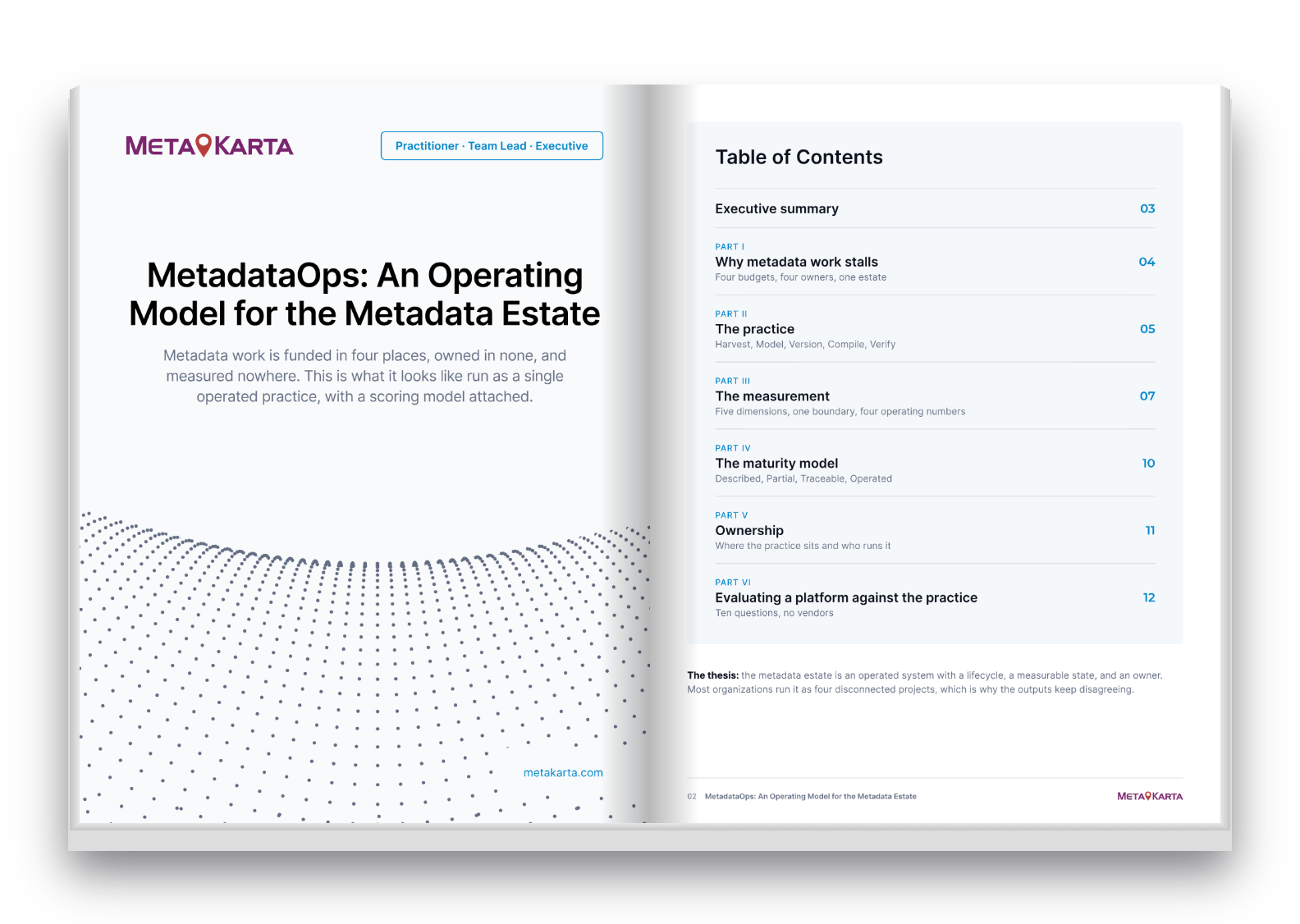
MetadataOps: An Operating Model for the Metadata Estate
How to run metadata as a single operated practice, with a scoring model attached
Most organizations fund metadata work four times, through catalog, lineage, governance, and AI projects, and none of them owns whether the estate as a whole holds together. This paper lays out MetadataOps: a build, test, deploy, diff, and rollback lifecycle applied to meaning, plus a five-dimension scoring model and a four-level maturity ladder.
MetadataOps Operating Model White Paper
What You'll Learn
Why metadata work stalls: four budgets, four owners, one estate
The MetadataOps lifecycle: Harvest, Model, Version, Compile, Verify
A five-dimension scoring model and the four operating numbers to track
The maturity ladder: Described, Partial, Traceable, Operated
Where the practice should sit in your organization and who should run it
Ten vendor-neutral questions to hold any metadata platform to
Register now to get your own copy of MetadataOps: An Operating Model for the Metadata Estate!
Business definitions, which govern financial reporting and increasingly govern what AI systems tell people, are still edited directly in production interfaces by whoever holds permissions."
400+
Native Connectors
MetaKarta connects data lineage, cataloging, governance, and semantic enforcement across more than 400 enterprise systems, enabling organizations to define business logic once and deploy it consistently across warehouses, BI tools, data pipelines, and AI agents.